
Millard County Criminal Court Cases
Millard County criminal cases do not all begin at the same counter. The Fourth Judicial District Court in Fillmore receives every felony and class A misdemeanor filing. The Millard County Justice Court in Fillmore handles most lower-level east-county matters. The West Millard and Delta City Justice Court in Delta serves the west side. Each clerk maintains the pleadings, minute entries, hearing history, judgments, and other court records for its own docket.
The distinction matters because a name or number search can miss a file when the wrong jurisdiction is selected. A case number is not unique across all Utah courts. The first two digits state the filing year, but the court location remains part of the identity. Juvenile delinquency matters use the Fourth District Juvenile Court and are restricted rather than listed in the public search. The official Millard County court directory provides the two local court locations and phone channels.
Millard Criminal Courts by Charge
Charge class supplies the best first routing clue. Fourth District Court holds first-, second-, and third-degree felony cases, as well as class A misdemeanor cases. Millard County justice courts usually hold class B and C misdemeanors, infractions, and traffic matters. An arrest report may list an alleged offense before prosecutors settle on the filed charge, so verify the case in both jurisdictions when the level is unclear.
| Millard County court | Typical criminal work | Public counter |
|---|---|---|
| Fourth District Court | Felonies and class A misdemeanors | 765 S Highway 99, Fillmore |
| East Justice Court | Most class B/C misdemeanors, infractions, traffic | 765 S Highway 99, Suite 2, Fillmore |
| West/Delta Justice Court | West-county lower-level and municipal matters | 71 S 200 W, Delta |
| Juvenile Court | Restricted juvenile matters | 765 S Highway 99, Suite 5, Fillmore |
Utah's general sentencing ranges help explain the split, but an offense-specific law can control. Class A misdemeanors can carry up to 364 days, while class B and C misdemeanors have shorter general maximums. Court assignment, not the label on an intake sheet, tells a searcher where the lasting Millard County case file lives.
Searching Millard County Case Records
Utah Courts Xchange Public Case Search is the main statewide channel for public district- and justice-court data. Guest and account access are available. A careful Millard County criminal case search should use the county or court scope because names, citation numbers, and case numbers can yield records from more than one location.
- Enter Xchange as a guest or account holder, then select District Court, Justice Court, or both.
- Set the search scope to Millard County or the known Fillmore or Delta court location.
- Search by case number or party name. Add birth date, case type, or a date range when results are broad.
- Open the case number for expanded history, then use the separate history and documents control for available images.
- Contact the correct Millard County clerk for certified copies, older files, or public material that is not imaged.
| Field label | Type | Required | Use |
|---|---|---|---|
| Jurisdiction | Choice | Unspecified | District, justice, or both |
| Case Number | Text | No | Pair with the court because numbers are not statewide-unique |
| Last Name/Company | Text | Conditional | Main public name field |
| First Name | Text | No | An asterisk can return variants |
| Case Type | Dropdown | No | Narrow to a criminal type or code |
| Search Scope | Dropdown | No | State, county, or court location |
| Birth Date | Date | No | Helps distinguish criminal defendants |
| Date Range | Expandable | No | Limits filing or event dates |
The official Xchange help page illustrates those controls.
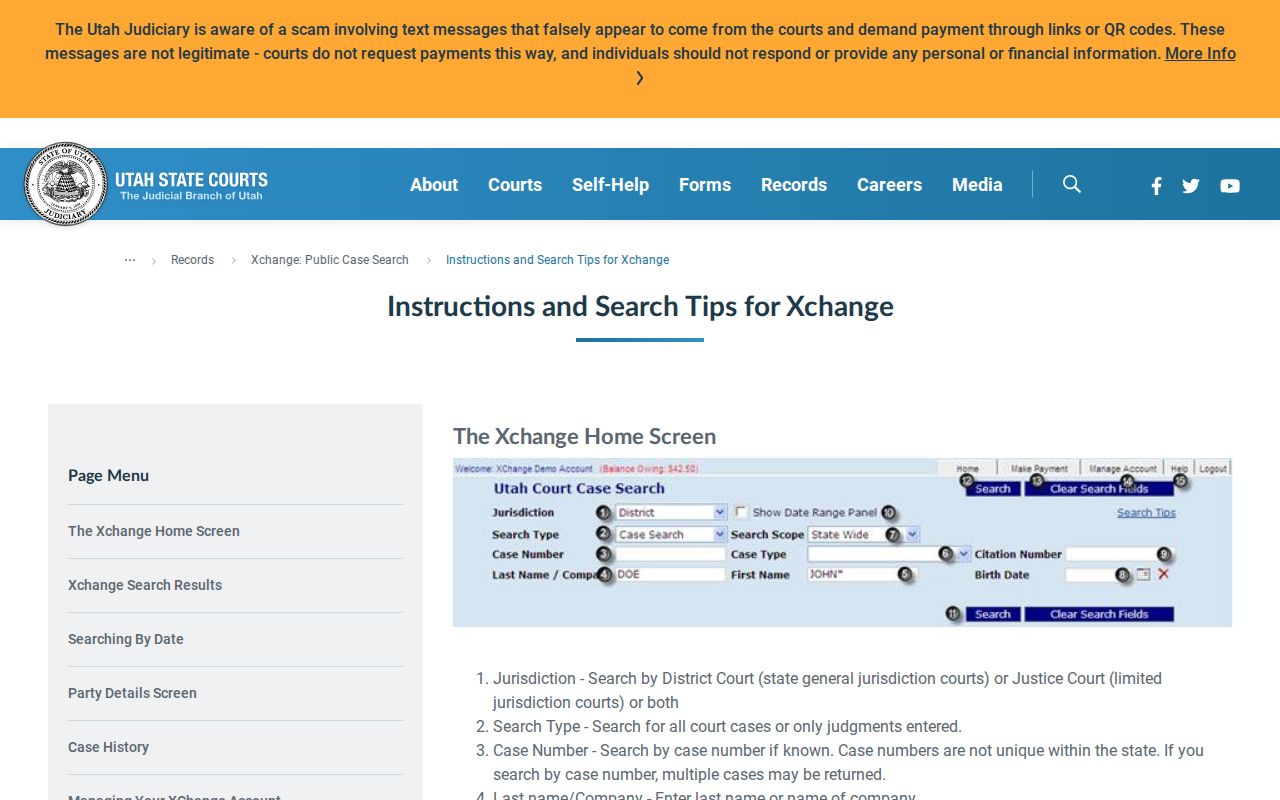
The screen image helps separate a broad statewide query from a focused Millard County court search.
Millard Court Search Traps
Xchange updates after court staff enter data in CORIS, but fast posting does not mean every source document is online. Search results stop at 500 entries. Older converted cases can contain less detail. Public district-court documents filed since July 1, 2010 may be available for purchase when imaged, yet the case-number link and the documents link serve different purposes. The first opens an expanded history. The second reaches document images.
Current official pricing lists $0.35 per search and $1 per document for one-time guest or account use. A one-time account starts with a $10 transaction credit, while a guest loses unused credit after the session. Monthly service has a setup fee and monthly charge. Parties to supported cases can instead use MyCase, a free identity-verified channel that requires case information and email verification.
The linked Xchange help image above is not the case file itself. Millard County readers should retain the court name, case number, and filing year before leaving a result screen.
Inside a Millard County Case File
A Millard County court file records the prosecution, not merely the arrest. The filed complaint or information identifies the charge the prosecutor chose to pursue. Later docket entries show hearings, motions, pleas, rulings, and the outcome. Charges may be amended or dismissed, so the disposition row is often more useful than the first charge listed.
| Case Number & Court | Nine-digit identifier, filing year, county, location, and case type |
|---|---|
| Charging Document | Complaint, information, citation, or other filed charging paper |
| Parties | Public party name and code, with attorney and judge when shown |
| Docket Entries | Chronological filings, orders, minutes, and court events |
| Hearing Dates | Scheduled and completed appearances in the case history |
| Disposition & Judgment | Outcome of each count, including dismissal, acquittal, plea, or conviction |
| Sentence & Conditions | Custody, probation, fines, restitution, and other ordered terms when public |
A summary view may omit a document or protected detail. It should not be read as the entire clerk file.
Older Millard Criminal Court Files
When a Millard County file is not imaged, use the Utah Courts Request for Court Record route or contact the holding clerk. Public courthouse terminals offer another Xchange channel. Paper copies are listed at $0.25 per sheet. Fax or email is $5 for up to ten pages and $0.50 for each added page, though the court will not send by those methods material already available through Xchange. The first 15 minutes of staff search and retrieval are free; later time is billed under the published staff schedule.
Describe the court, case number, party, record type, and date range. Ask for an estimate before a broad request. Utah Courts says record requests are usually answered within ten business days. Certified copies and hearing media require a clerk request rather than a screenshot of the docket.
The official Utah court-record access page explains classifications and request routes. A clerk can also confirm whether a sparse online result reflects an archived record, a missing image, or a nonpublic classification.
How a Millard Criminal Case Moves
A Millard County criminal case may follow an arrest or citation, but it becomes a court record only after a charging step reaches the clerk. At arraignment, the charges and rights are addressed and a plea is entered. A not-guilty plea leads toward pretrial work and motions. A guilty or no-contest plea can move toward sentence. A trial may be heard by a judge or jury, depending on the case and applicable rights.
Case flow: Charges Filed › Arraignment › Pretrial › Plea or Trial › Disposition › Sentencing
The disposition should be read charge by charge. A dismissed count is not a conviction. A no-contest plea has the procedural effect of a guilty plea without an express admission. The Delta court hearing guide gives a local explanation of arraignment, pleas, pretrial, trial, sentencing, and review.
Read Millard Pleas and Outcomes
Plain terms prevent a common court-record error. A plea is the defendant's formal response. A disposition is the result of a charge or case. A conviction follows a guilty plea, no-contest plea, or guilty verdict. Dismissed means the count ended without a conviction, while acquitted means a not-guilty result after trial or an equivalent adjudication.
- Information
- The prosecutor's written charging document.
- Minute entry
- The clerk's record of a hearing or court action.
- Pretrial conference
- A hearing used for negotiation, motions, and scheduling after a not-guilty plea.
- Judgment
- The court's formal ruling on guilt and the case result.
- Sentence
- The punishment and conditions imposed after conviction.
For context on record clearing, the Utah Courts expungement process explains court forms and filing steps.
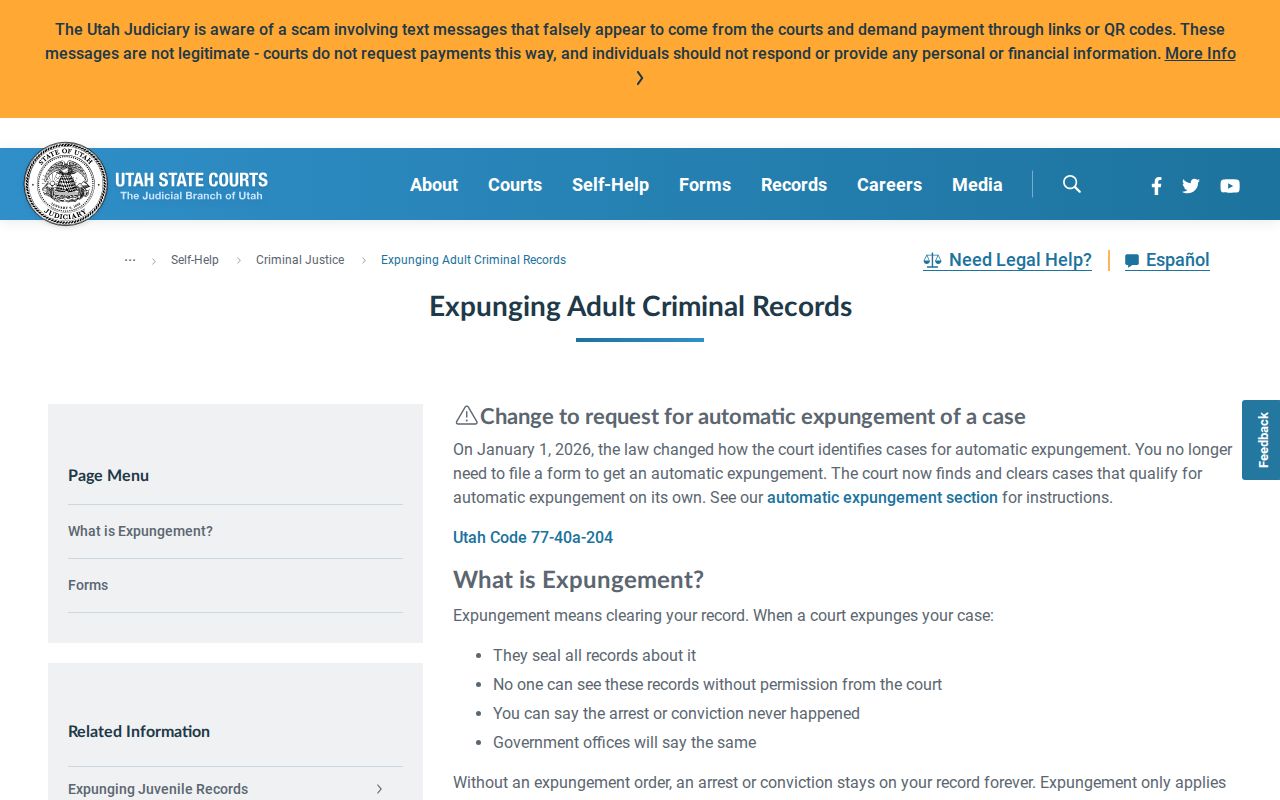
The court image shows why an expunged file follows a legal process rather than a routine docket correction.
Millard Court Counters East and West
Millard County's size creates two practical access points. The Highway 99 Justice Complex in Fillmore houses the Fourth District Court and East Justice Court functions. The Delta counter serves West Millard and city justice matters. The East Courtroom publishes weekday hours, while Delta publishes longer Monday through Thursday hours and a shorter Friday schedule. Call the exact clerk before a long trip because hearing days and archived county information can differ.
Fourth District Court
765 S Highway 99
Fillmore, UT 84631
(435) 743-6223
East Justice Court
765 S Highway 99, Suite 2
Fillmore, UT 84631
(435) 743-6952
West/Delta Justice Court
71 S 200 W
Delta, UT 84624
(435) 864-1403
The official PACER gateway is separate from these Utah state and local courts.
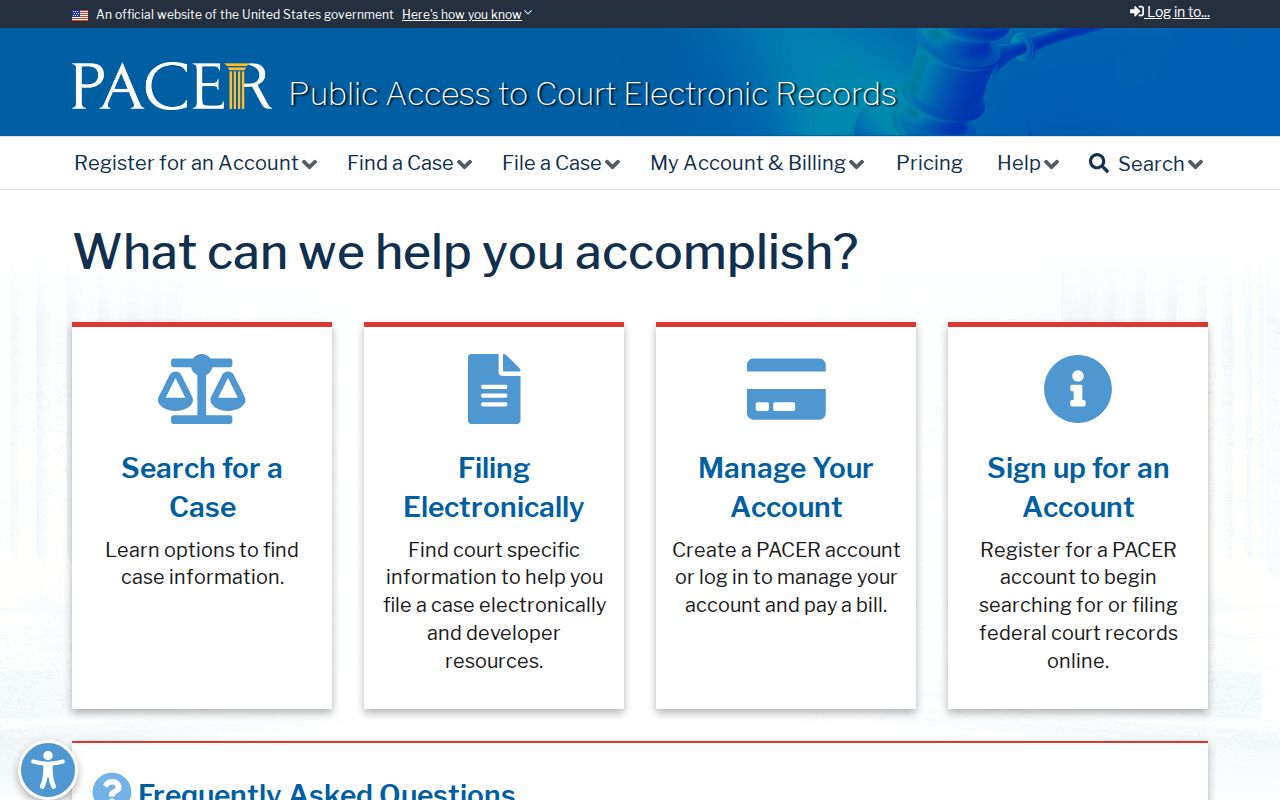
That federal search image marks a firm boundary: PACER does not contain Millard County district or justice court files.
Case Record Access & Restrictions
Utah court records may be public, private, protected, sealed, or juvenile under the judicial access rules. Xchange omits expunged and sealed cases, juvenile delinquency cases, child-welfare matters, and other nonpublic records. Public copies can redact victim, minor, medical, and personal identifying information. A missing case is therefore a prompt to check spelling, court scope, filing stage, and access status, not proof that no proceeding exists.
The Utah Expungement Act supplies the legal framework for qualifying records.
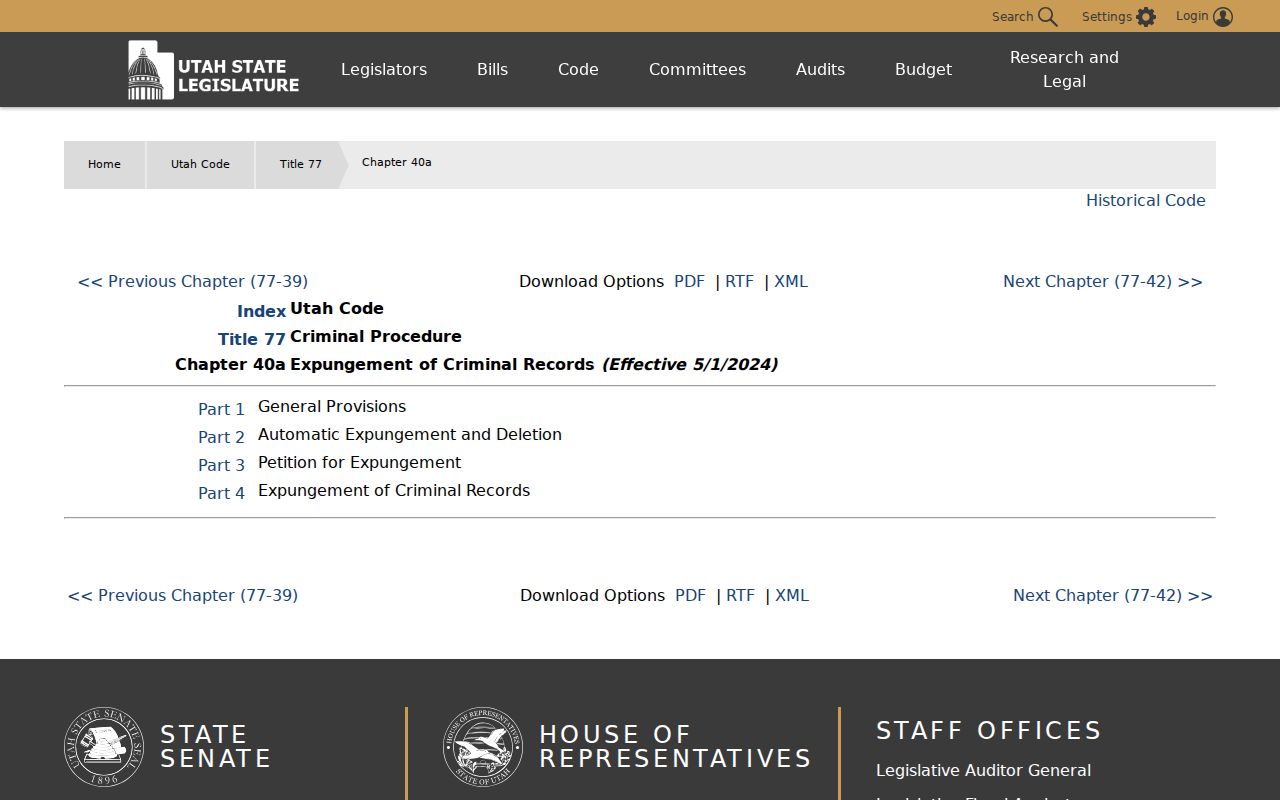
The statute image connects a missing expunged docket with the order-based process that restricts ordinary public access.
Millard Cases and BCI Records
A court docket and a Utah Computerized Criminal History record answer different questions. Xchange shows public case events and documents. The Utah Bureau of Criminal Identification links fingerprint-supported arrest cycles with reported outcomes across the state. BCI has no general-public name search. A person reviews their own record through the fingerprint-supported Right of Access process, and may challenge an error with supporting court material.
The BCI expungement channel handles certificates of eligibility and Clean Slate information.
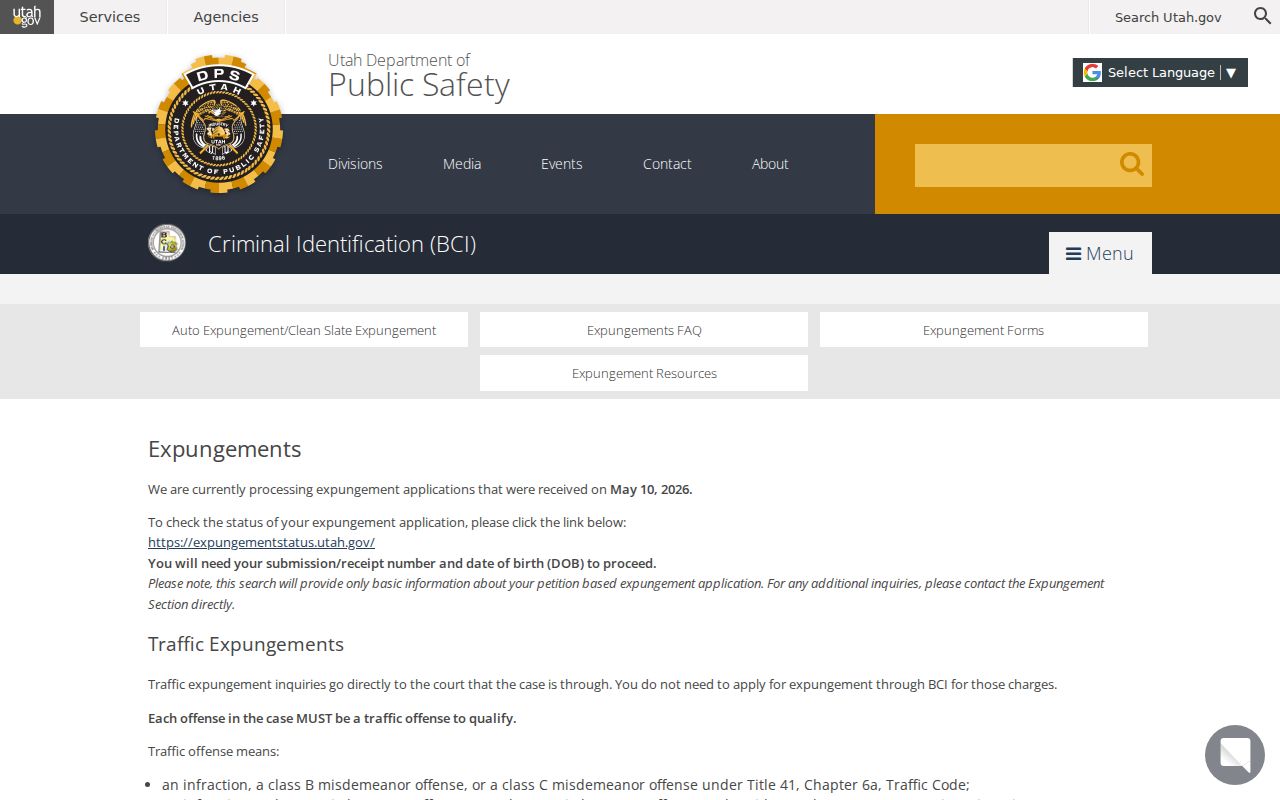
This BCI image shows the state repository side of a process that still depends on the Millard County court that decided the case.
When records conflict, obtain the Millard County disposition and use it to seek a correction from the agency that holds the inaccurate entry. For the earlier custody event, the Millard County arrest lookup explains the separate agency and jail records.